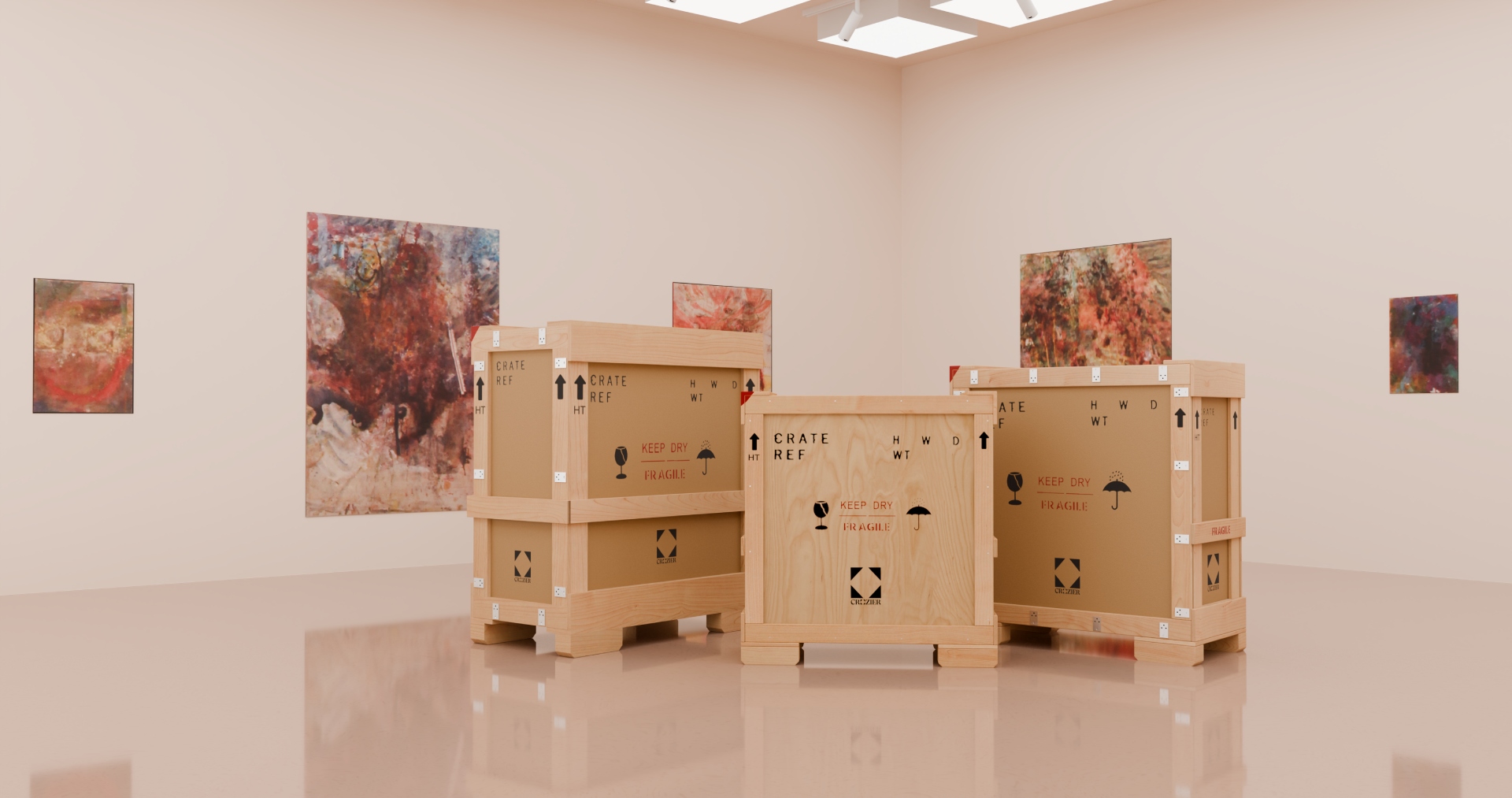
Across Crozier’s nine dedicated crate shops worldwide, our teams build more than 3,000 custom crates each year. Every project begins with the same question: what does this particular artwork need to remain protected?
Designed Around the Artwork
Size and weight are only part of the equation. An artwork’s structure, materials, surface fragility, sensitivity to shock or changes in climate, transportation method and handling needs can all influence the final design. Crozier experts evaluate these factors individually, considering everything from easy-access structural support to shock absorption and thermal insulation before fabrication begins.
Good crating starts with understanding the context of the project as well as the artworks. We look at how each work is constructed, where it’s going, and what it may encounter along the way, then engineer an efficient approach to preventive conservation around those needs.Chris Barber, Continuous Improvement Specialist, Crozier Fine Arts
Crozier crate designers assess each collections care project individually, using our proprietary crating system to explore design options and determine the appropriate materials, dimensions and construction before fabrication. Technician teams fabricate these solutions with craftsmanship and finish.
The result may be a straightforward transit crate, a storage solution or a highly specialized museum crate engineered for repeated journeys.
Purpose-Built Solutions
Our Museum, Standard, Utility and Slat crate styles provide practical starting points, but every crate can be adapted to meet the specific requirements of the artwork and project.
Explore the Crozier Crating Guide for a closer look at our crating options and specifications.
Museum Crate
Designed for works requiring precise technical protection, particularly during complex or repeated transit.

Museum Crate
Standard Crate
A versatile solution providing robust protection for a wide range of artworks and transportation requirements.

Standard Crate
Utility Crate
An efficient option for projects where practical protection and handling are the primary considerations.

Utility Crate
Slat Crate
A lightweight framework suited to objects that benefit from additional handling protection without requiring a fully enclosed crate.

Slat Crate
Smarter Use of Materials
Thoughtful crate design is also an opportunity to reduce material use. Crozier teams can assess whether existing crates can be modified and reused, while newly fabricated crates can be right-sized to avoid unnecessary material and transport weight through consolidation.
By considering protection requirements alongside material use and carbon impact projections, our teams can take a more informed approach to the lifecycle of each project.
Advancing Industry Best Practices
Crating standards continue to evolve alongside new materials, technologies and conservation research. Crozier is active with PACCIN — the Preparation, Art Handling, Collections Care Information Network, helping our specialists stay connected to the broader collections-care community and exchange knowledge around best practices in packing, handling and transportation.
Read Crozier’s reflections on the 2026 PACCIN Conference in Stockholm.
From the earliest assessment through fabrication, effective crating is ultimately about creating the right solution for the work inside it.