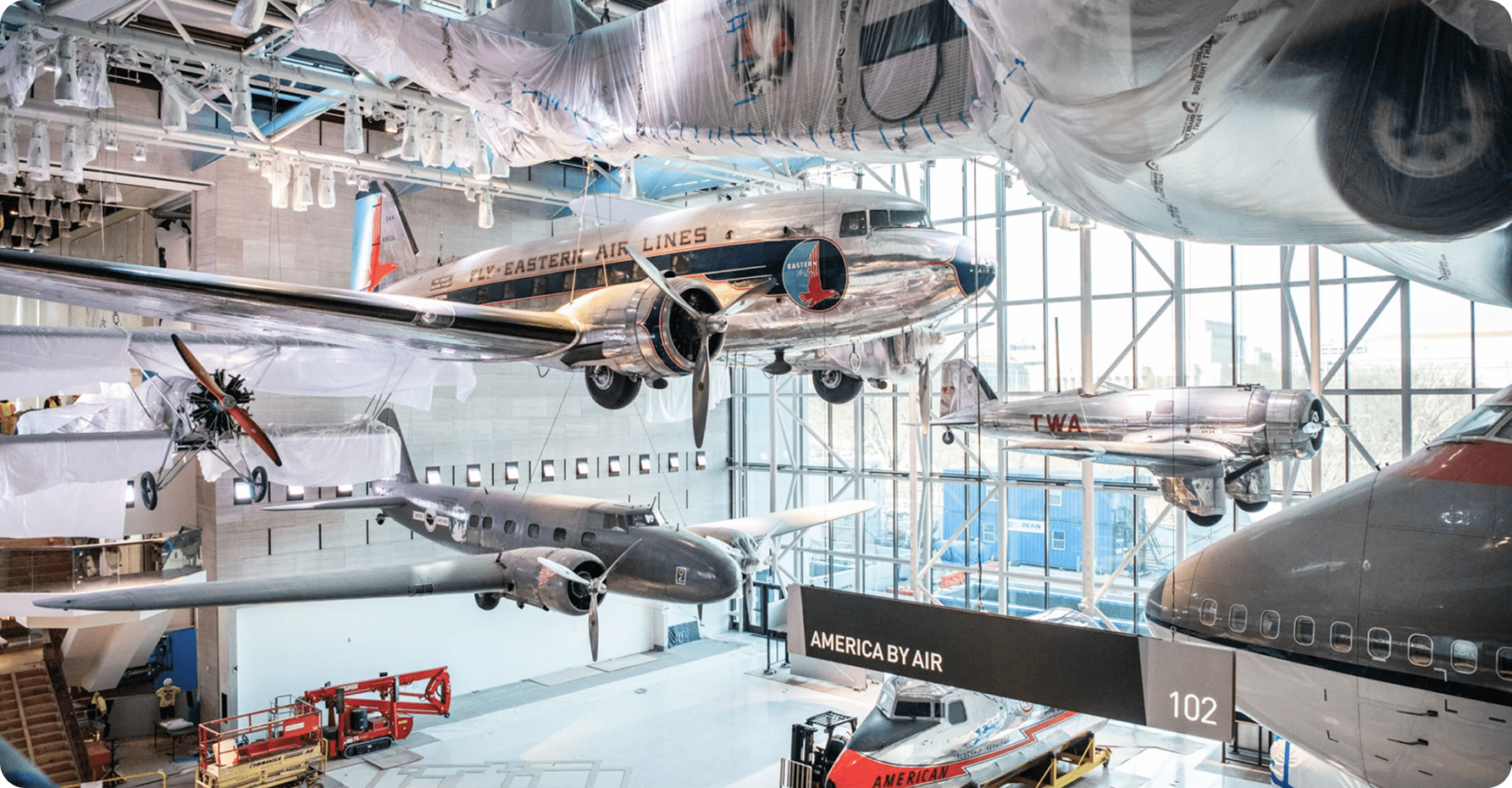
Special projects go beyond conventional fine art logistics. In each scenario, the objects, site conditions and complexity of the work often demand specialized engineering, rigging and project management.
Moving a 50-foot rocket booster weighing nearly 11 tons from a loading dock into a sunken gallery presents a different challenge than relocating 78,000 natural history specimens, from vials of pin bones to the skeleton of an African elephant. Crozier Special Projects has managed both. Neither job began with a truck; each began with a plan.
What distinguishes a special project
Most special projects have at least one of these factors:
- Size and weight. Objects exceed doorway clearances, elevator capacities or structural load limits.
- Fragility or construction. The object is composite or structurally unstable, or can travel only in pieces, so the team determines with a conservator what may be disassembled and how.
- The site. An occupied museum, an active construction zone, a historic interior, or a gallery with no direct path from the dock.
- Volume. The relocation of an entire collection, in which accounting for thousands of objects through packing, transit, storage and return matters as much as the safe passage of any one of them.
- Multiple stakeholders. Collections staff, conservators, engineers, contractors and designers working across different schedules.
Reading the object and the building
Every project begins with two surveys: one assessing the object's condition, vulnerabilities, weight-bearing points and center of gravity; the other evaluating the building's access routes, clearances and structural load limits.
Working alongside registrars, conservators and structural engineers as needed, the team develops a detailed plan covering handling, packing, rigging, equipment, sequencing and responsibilities.
"The projects we work on rarely come with a standard playbook. Our job is to understand all of the variables, anticipate where the challenges might be and build a plan that allows the team to move forward safely and confidently."Garrett Gipson, Program Manager, Special Projects, Crozier

Credit: Jonathan McKnight, Art Handling Coordinator, Crozie
"I've been incredibly impressed by the problem solving, the care, and the attention to detail shown by the Crozier team."Mary Worrall, Director of Collections, MSU Museum
One project manager, one plan
Each project has a single point of accountability in a dedicated Crozier project manager who sets weekly agendas, leads progress and closeout walkthroughs, runs quality-control checks, and coordinates construction teams, design firms, vendors and owner's representatives. Budget considerations, from staffing and materials to crate reuse and scheduling, are integrated into the planning process.
As access windows shift, schedules change or unexpected vulnerabilities emerge, the team adjusts the plan and secures necessary approvals rather than improvising on site.
The case for an early call
Bringing Crozier into a project early allows routes, staging and schedules to be developed around the needs of the collection, before construction plans and exhibition layouts are finalized. For complex renovations, relocations or installations, connect with our Special Projects team to start planning.